
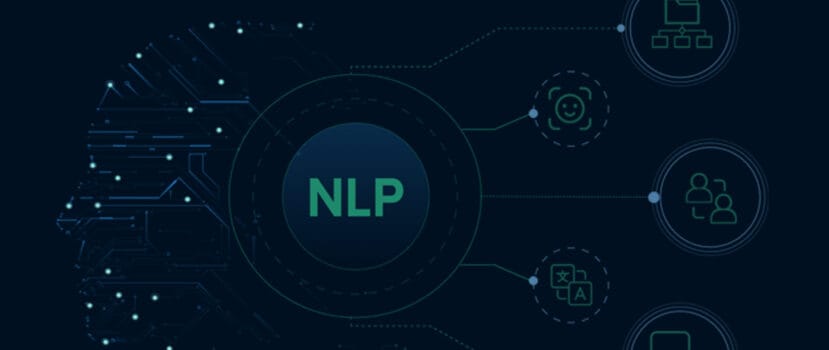
Natural Language Processing (NLP)
Understanding Natural Language Processing (NPL):
Applications, Career Opportunities, and Future Outlook
What is Natural Language Processing (NLP)?
Natural Language Processing, commonly referred to as NLP, is a specialized subfield of artificial intelligence (AI) that emphasizes the interaction between computers and humans via natural language. This influential discipline strives to facilitate effective communication between machines and people by allowing computers to comprehend, interpret, and generate human language in a valuable way.
The essence of NLP lies in its ability to bridge the gap between human communication and machine understanding. This involves a combination of linguistics and computer science, where linguistic knowledge is utilized to provide a foundation upon which AI can understand language nuances. Key concepts in NLP include tokenization, syntactic parsing, semantic analysis, and sentiment analysis, among others. Tokenization refers to the process of breaking down text into smaller components, or tokens, such as words or phrases, which can then be analyzed individually. Syntactic parsing focuses on understanding the grammatical structure of a sentence, while semantic analysis aims to derive meaning from text.
The significance of NLP cannot be overstated, as it plays a critical role in numerous applications, including chatbots, language translation services, sentiment analysis tools, and voice-activated virtual assistants. These applications enable machines to perform tasks that require language understanding, improving user interactions across various platforms. In addition, NLP technologies empower businesses to analyze customer feedback, monitor social media sentiment, and automate support services, which enhance overall efficiency and decision-making.
In summary, Natural Language Processing is a crucial area of study within artificial intelligence that enables machines to interpret and process human language effectively. By combining linguistic insights with advanced algorithms, NLP fosters more intuitive human-computer interactions, thereby enhancing productivity and communication across different fields.
Applications and Use Cases of NLP
Natural Language Processing (NLP) has emerged as an influential technology that bridges the gap between human communication and machine understanding. Various industries are leveraging NLP to enhance operational efficiency and user experience. One prominent application of NLP is the development of chatbots. These virtual assistants utilize NLP algorithms to comprehend user queries and provide relevant responses, thereby facilitating customer support and engagement round the clock.
Another significant application is sentiment analysis, which involves interpreting and categorizing emotions expressed in text. Businesses are harnessing sentiment analysis to gauge public opinion regarding their products, services, or brand image. By analyzing social media interactions, online reviews, and customer feedback, organizations can make informed decisions to tailor their strategies accordingly.
Machine translation is yet another compelling use of NLP. This technology enables the automatic translation of text from one language to another, largely improving communication in our increasingly globalized society. Tools such as Google Translate exemplify this application, allowing users to converse across linguistic barriers seamlessly.
Automated content generation is also gaining traction, particularly in industries that require large volumes of content creation. NLP can be employed to generate reports, articles, and summaries based on input data, thereby saving time and reducing the workload for content creators.
In healthcare, NLP applications are proving revolutionary. From extracting patient information from medical records to developing intelligent virtual health assistants, NLP is streamlining processes and elevating patient care quality. These applications facilitate critical tasks, such as disease diagnosis and treatment recommendations by parsing through vast amounts of unstructured medical data.
Each of these NLP applications significantly enhances efficiency and user experience across various sectors, underscoring the vital role of Natural Language Processing in today’s technology-driven landscape.
Career Opportunities in NLP
The field of Natural Language Processing (NLP) offers a vast array of career opportunities, reflecting its increasing importance in technology and business. As companies venture more deeply into artificial intelligence and automation, positions such as NLP Engineer, Data Scientist, Research Scientist, and Software Developer are in high demand. Each role requires a unique blend of skills and expertise, making this domain appealing to a variety of professionals.
An NLP Engineer focuses primarily on building and optimizing algorithms that convert natural language into a format suitable for machine processing. This role usually requires a strong background in programming languages such as Python or Java, along with a solid understanding of machine learning techniques. According to industry reports, NLP Engineers can expect a salary ranging between $100,000 to $140,000 annually.
On the other hand, Data Scientists deploying NLP techniques analyze large datasets to extract valuable insights. They often utilize statistical methods and data visualization tools to enhance their findings. A Data Scientist with proficiency in NLP can earn between $90,000 and $130,000, depending on experience and geographic location.
The role of a Research Scientist involves advancing the theoretical understanding of NLP while developing innovative algorithms and models. This position is often found in academia or within research divisions of tech companies, with salaries typically falling into the range of $110,000 to $150,000. A Ph.D. in a related field is generally preferred for this position.
Additionally, Software Developers creates applications that incorporate NLP functionalities. They may work on chatbots or translation software, among other projects. With a solid understanding of both software engineering principles and NLP, these professionals can expect salaries ranging from $85,000 to $120,000.
With the rapid advancements in technology, professionals in NLP can anticipate significant career growth. Continuous upskilling through online courses and workshops can further enhance job prospects and salary potential, thereby making NLP a compelling field for future employment.
The Technology Behind NLP
Natural Language Processing (NLP) is a multidisciplinary field that leverages various technologies and methodologies to enable machines to understand and interact with human language. At its core, NLP combines computational linguistics and artificial intelligence, which encompasses a range of algorithms that facilitate the processing of language data.
One of the foundational technologies driving NLP is machine learning. In this context, algorithms are trained on vast amounts of textual data, learning to identify patterns and make predictions about language. Algorithms such as decision trees, support vector machines, and random forests are often employed for tasks like sentiment analysis and classification of text. Recently, deep learning models have gained significant traction, particularly with the advent of neural networks, which mimic the way the human brain processes information.
Deep learning architectures, especially recurrent neural networks (RNNs) and transformers, have revolutionized the NLP landscape. These models can captivate contextual information, allowing systems to understand language more effectively and craft coherent and contextually relevant responses. Notable transformer models include BERT and GPT, which have enhanced various applications such as chatbots, language translation, and text summarization.
Moreover, linguistic theory plays a critical role in shaping NLP methodologies. Understanding syntax, semantics, and pragmatics provides essential insights into how language operates, guiding the development of more sophisticated models. This knowledge encourages the creation of better algorithms that respect linguistic nuances and enhance user interactions.
Additionally, several libraries and frameworks, such as NLTK, SpaCy, and TensorFlow, offer tools that simplify the implementation of NLP tasks. These resources help beginners and experts alike build robust models efficiently, significantly advancing the capabilities and accessibility of natural language processing technologies.
Complementary Skills for NLP Professionals
Natural Language Processing (NLP) has evolved as a field that sits at the intersection of linguistics, computer science, and artificial intelligence. To excel in this domain, professionals must cultivate a diverse set of complementary skills. This multifaceted approach not only enhances one’s ability to produce effective NLP solutions but also broadens career opportunities.
One of the most critical programming languages for NLP is Python. Its extensive libraries, such as NLTK, SpaCy, and TensorFlow, are designed specifically for NLP tasks, making it a preferred choice among practitioners. R programming also plays a significant role, particularly in statistical analysis and visualization tasks, which are vital for interpreting language data.
A solid foundation in statistics is another important attribute for NLP professionals. Understanding statistical methods enables practitioners to analyze language data effectively, drawing meaningful insights and making informed decisions. For instance, applying statistical techniques can enhance model performance in sentiment analysis, allowing for deeper insights into customer feedback.
Additionally, a background in linguistics is indispensable. Familiarity with syntax, semantics, and pragmatics equips professionals to create more nuanced NLP applications. For example, a linguist’s knowledge can help improve the accuracy of language processing algorithms by considering the subtleties of human communication.
Machine learning expertise is equally essential. Many NLP applications rely on machine learning techniques such as supervised learning, unsupervised learning, and deep learning. These methodologies are employed in tasks like text classification, language translation, and chatbot development. Professionals proficient in machine learning can enhance the performance of NLP systems, making them more robust and efficient.
By developing these complementary skills, NLP professionals position themselves not only to tackle complex language-related challenges but also to lead innovative projects within their organizations. This holistic skill set ultimately strengthens their careers and contributes to advancements in the field of natural language processing.
How and Where to Acquire NLP Skills
Natural Language Processing (NLP) is an interdisciplinary field that combines linguistics, computer science, and artificial intelligence. Given its increasing relevance across various industries, acquiring skills in NLP can be a valuable asset. There are numerous educational pathways available for individuals interested in pursuing this field.
Formal education options such as degrees in computer science, data science, or artificial intelligence often provide a comprehensive foundation in the necessary algorithms and programming languages. Several universities offer specialized programs focusing on NLP, equipping learners with theoretical and practical knowledge. Additionally, obtaining certifications can be advantageous; various institutions provide credentials that reflect expertise in this area, enhancing career prospects.
Online learning platforms, such as Coursera, Udacity, or edX, have made acquiring NLP skills more accessible. These platforms offer a range of courses, from introductory to advanced levels, often developed in collaboration with leading educational institutions. Participants can learn at their own pace, making it convenient for both professionals and students. Courses typically cover essential topics, including linguistic processing, machine learning methods, and natural language understanding.
Self-study remains a viable option as well, with a plethora of resources available. Books such as “Speech and Language Processing” by Jurafsky and Martin can serve as fundamental texts. Additionally, numerous tutorials and research papers are available online, helping learners stay updated on current trends and technologies. Engaging with communities and forums can also offer valuable insights.
Moreover, practical application of NLP concepts through hands-on projects is crucial. Engaging in real-world applications or internships allows learners to refine their skills and gain experience. The intersection of theoretical knowledge and practical experience is essential for mastering NLP, as it helps in understanding the nuances and complexities involved in natural language processing.
Benefits of NLP for Developers
Natural Language Processing (NLP) has emerged as a pivotal area for software developers, significantly enhancing how applications interact with users. By incorporating NLP, developers can create applications that understand and respond to human language, thereby improving user engagement and satisfaction. This capability allows for the design of more intuitive user interfaces, where users can interact with technology in a more natural and conversational way. For instance, chatbots and virtual assistants equipped with NLP can provide real-time support, making user interactions smoother and more effective.
Moreover, NLP plays a crucial role in sophisticated data processing. It enables developers to analyze large volumes of unstructured text data, extracting valuable insights that can inform business decisions or enhance product features. Through text classification, sentiment analysis, and entity recognition, developers can process feedback, review data, and social media mentions, empowering businesses to understand their audience better and tailor their offerings accordingly.
As the demand for AI-driven solutions grows, the integration of NLP into existing projects becomes increasingly desirable. Developers can leverage NLP tools and libraries, such as NLTK, SpaCy, or Microsoft’s Text Analytics API, to enhance their applications with advanced language capabilities. By adapting their skill sets to include NLP, developers position themselves strategically in the job market, opening up numerous career opportunities in a field that’s rapidly evolving.
Furthermore, proficiency in NLP equips developers with the means to innovate and contribute to projects that require a human-like understanding of language. As organizations continue to prioritize user-centric designs, the ability to implement NLP technologies can significantly elevate a developer’s value, ensuring they remain relevant in a competitive landscape.
Future Outlook of NLP
The future of natural language processing (NLP) is poised for remarkable advancements driven by the rapid evolution of artificial intelligence (AI) and deep learning technologies. These advancements are likely to significantly enhance the capabilities of NLP systems, making them more effective in understanding and generating human language. As AI models continue to grow in complexity and efficiency, we can expect far superior language comprehension, context sensitivity, and conversational fluency.
One notable trend is the increasing emphasis on emotion recognition in NLP applications. The ability for machines to interpret and respond to human emotions through text or speech may usher in a new era for user experience across various platforms. This could lead to more empathetic AI systems, fundamentally improving interactions in customer service, mental health, and personal assistants by acknowledging emotional nuances and tailoring their responses accordingly.
In addition, developments in multilingual processing are anticipated to break down language barriers, offering seamless communication in an increasingly globalized world. Enhanced NLP systems will likely support a wider array of languages and dialects, making content accessible to diverse audiences. This will also foster inclusivity in technology, as non-native speakers will be able to use tools in their preferred languages with greater efficacy.
However, as NLP technology continues to advance, ethical considerations will become increasingly pertinent. Issues relating to data privacy, bias in language models, and the potential for misuse of NLP applications must be critically evaluated. Balancing innovation with ethical integrity will be essential to ensure that the benefits of NLP are realized while minimizing potential harm.
Conclusion: Embracing NLP as a Growing Field
Natural Language Processing (NLP) has emerged as a pivotal technology that plays an essential role in bridging the communication gap between humans and machines. As the digital landscape continues to evolve, the significance of NLP in enabling more intuitive and efficient interactions cannot be overstated. From virtual assistants to automated customer service solutions, NLP applications are becoming predominant in various sectors, showcasing its versatility and necessity.
The career opportunities within the NLP field are burgeoning, providing a vast array of roles for professionals with diverse skills. Data scientists, linguists, and software engineers are increasingly in demand as organizations recognize the value of harnessing language data. Moreover, as NLP technologies advance, new job roles are anticipated to emerge, necessitating a continual adaptation and acquisition of newer skills. This aspect of lifelong learning is crucial for individuals aiming to thrive in this fast-paced sector.
As we look toward the future, the impact of NLP on technology and society is expected to expand, influencing areas such as education, healthcare, and entertainment. The continuous investment in research and development will likely yield innovations that enhance the capabilities of NLP systems, enabling them to understand context, sentiment, and semantics with greater accuracy. Thus, it is imperative to explore the nuances and capabilities of NLP, both for personal and professional growth.
In summary, the journey into the realm of Natural Language Processing is not just about understanding linguistic algorithms; it is about engaging with a field that holds the potential to redefine human-computer interaction. Aspiring professionals and enthusiasts alike are encouraged to immerse themselves in this evolving domain to leverage its vast potential and stay abreast of technological advancements that are shaping our future.
Sign Up
Forgot Password
Cart
Your cart is currently empty.